YOUR PET DESERVES A
MADRONE HOME
Wild-harvested Pacific Madrone and Manzanita. Naturally antimicrobial. Built to last decades.
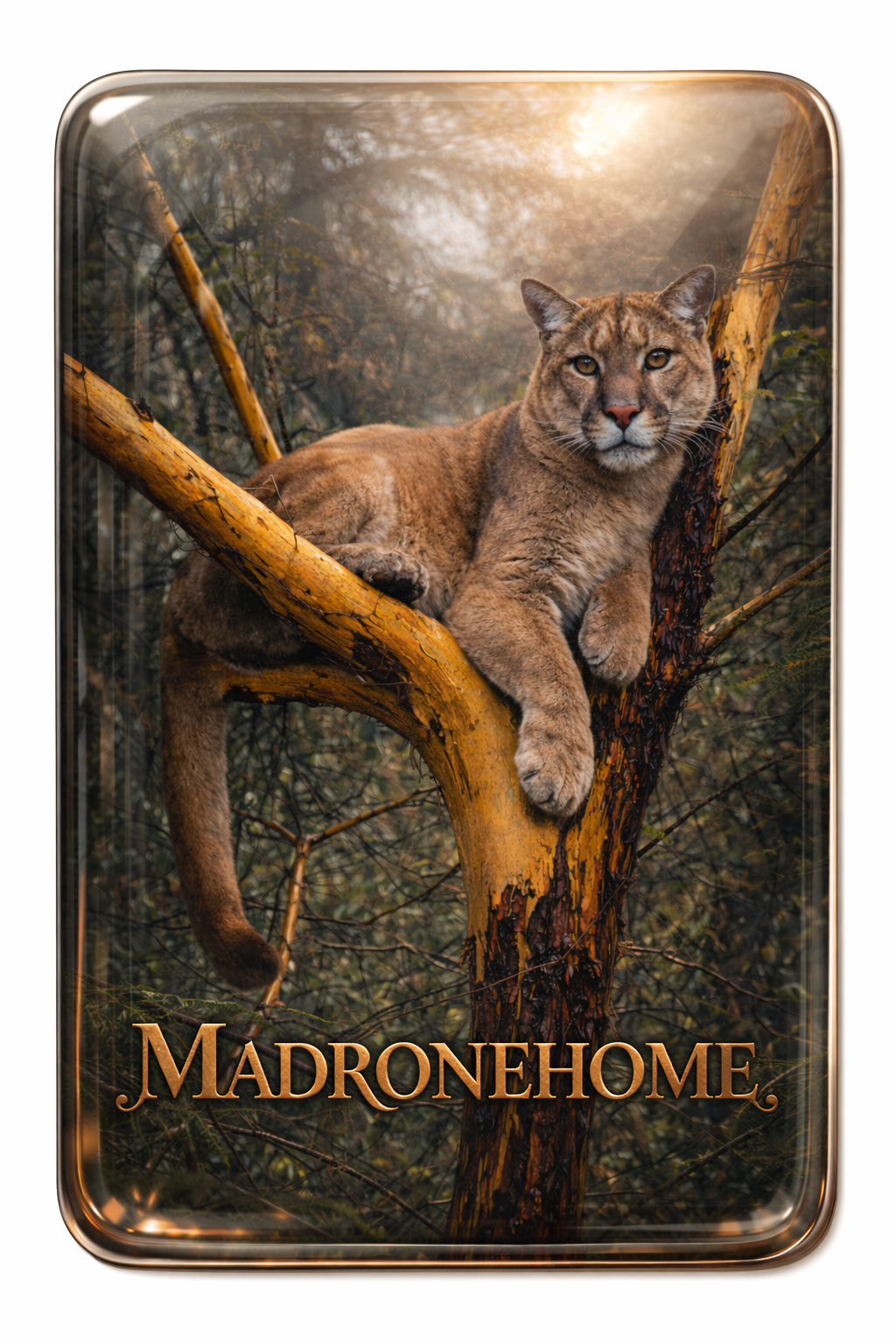
SHOP NOW LEARN MOREPuma concolor — the ghost cat of the Pacific Northwest. Oregon is home to an estimated 6,600 mountain lions, making it one of the densest populations in North America. These solitary apex predators patrol territories spanning 50 to 150 square miles through the same coastal Madrone forests where we harvest our wood.
They're the largest cat native to Oregon, reaching up to 180 lbs, and have been documented at elevations from sea level to 10,000 feet. Despite their size, mountain lion encounters are exceptionally rare — they are masters of stealth.
Wild-harvested Pacific Madrone and Manzanita. Naturally antimicrobial. Built to last decades.
SHOP NOW LEARN MOREPacific Madrone (Arbutus menziesii) is a rare coastal hardwood native to the Pacific Northwest. Its natural range extends from British Columbia to California, concentrated in Oregon's coastal mountains. Madrone is naturally antimicrobial, resistant to decay, and structurally dense — heavier than oak when fully cured.
The tree's iconic red bark peels away in papery sheets, revealing smooth green underlayers that age to cinnamon. The wood itself is hard, fine-grained, and virtually indestructible once dry. Historically used for tool handles, gunstocks, and furniture, Madrone is now rare in commercial lumber due to unpredictable grain and difficult milling.
We harvest only storm-downed wood. No living trees are cut. Every branch comes from windfall collected on private coastal Oregon land with landowner permission. Pacific Madrone is a threatened species — climate stress, logging, and development have reduced its coastal range. By sourcing exclusively from natural windfall, we ensure the living groves remain intact.
The wood is collected after winter storms, when high winds break branches from mature trees. Each piece is inspected for structural integrity, cleaned of debris, and transported to our curing facility in the PNW region.
Madrone and Manzanita are dense hardwoods that require slow, natural curing. The pieces used for perches are too large to boil or kiln-dry without damaging them. Fresh-cut wood is cleaned, trimmed, and stored in a dry, ventilated space for a full year.
This slow curing cycle lets internal moisture leave naturally, preventing mold, cracking, and warping. After curing, each piece is surface-sanitized, cleaned again, and finished by hand. Edges are shaped, loose material is removed, and the wood is checked for stability before being listed.
No chemicals are used. The wood's natural antimicrobial properties remain intact. The branches available this season were harvested last season. The pieces harvested this year will be ready next year. This is how we maintain quality — no shortcuts, no chemical treatments, just time and natural processes.